
Last updated November 15, 2026
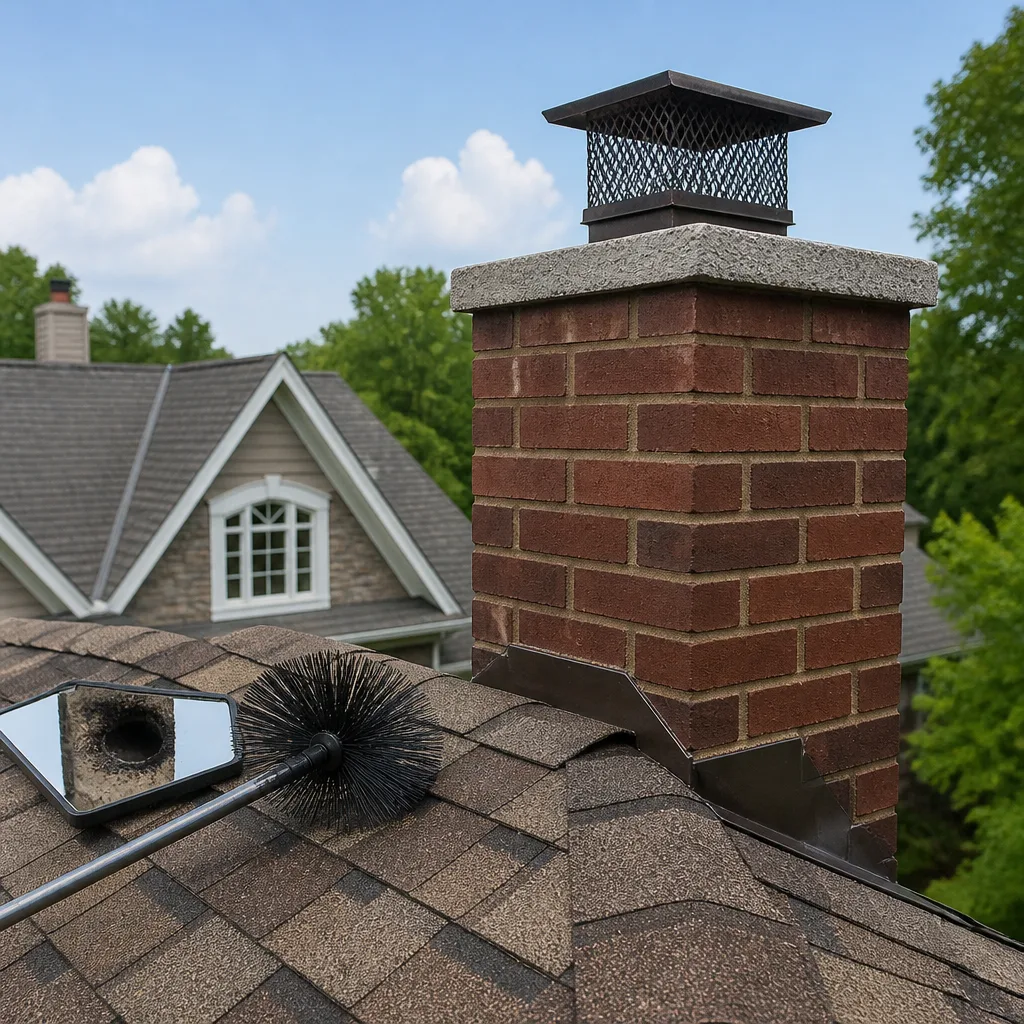 Sweep & inspection
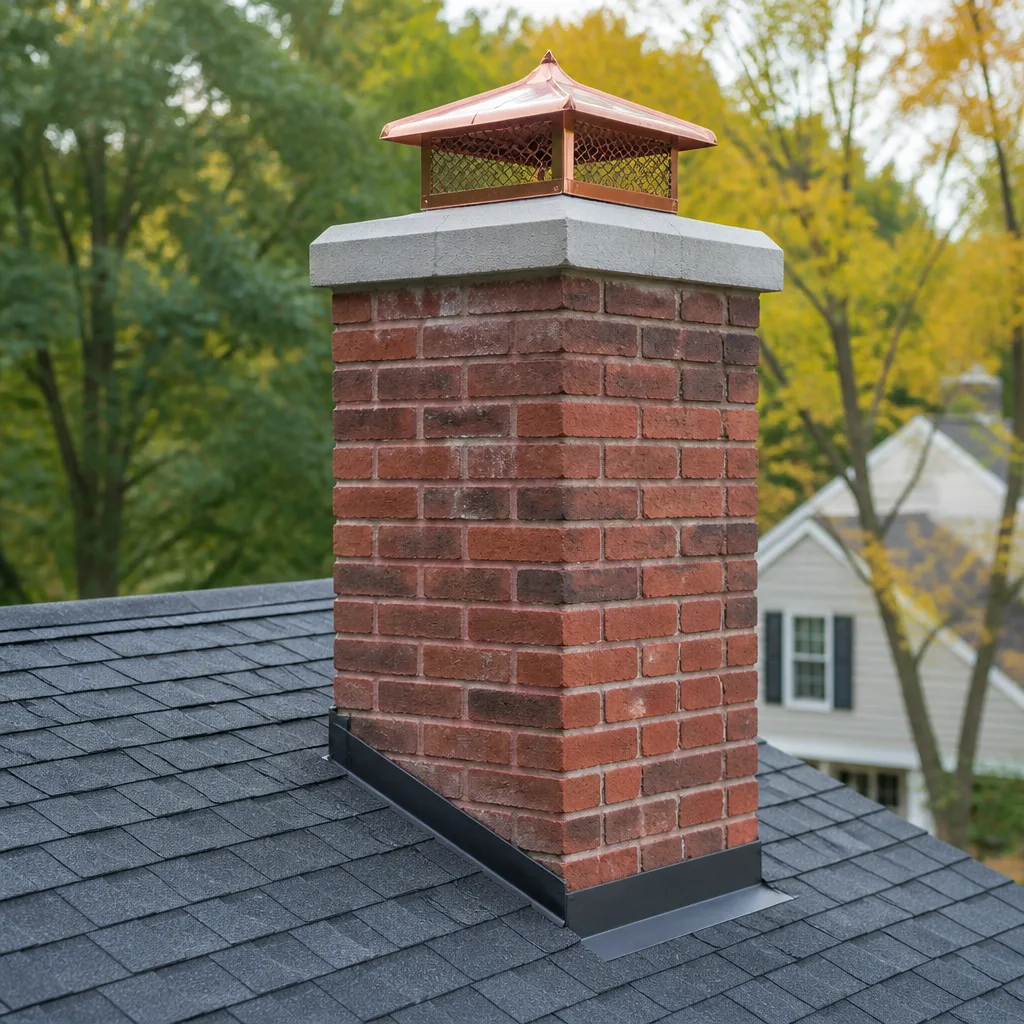 Caps & crowns
 Flue relining
 Masonry repair
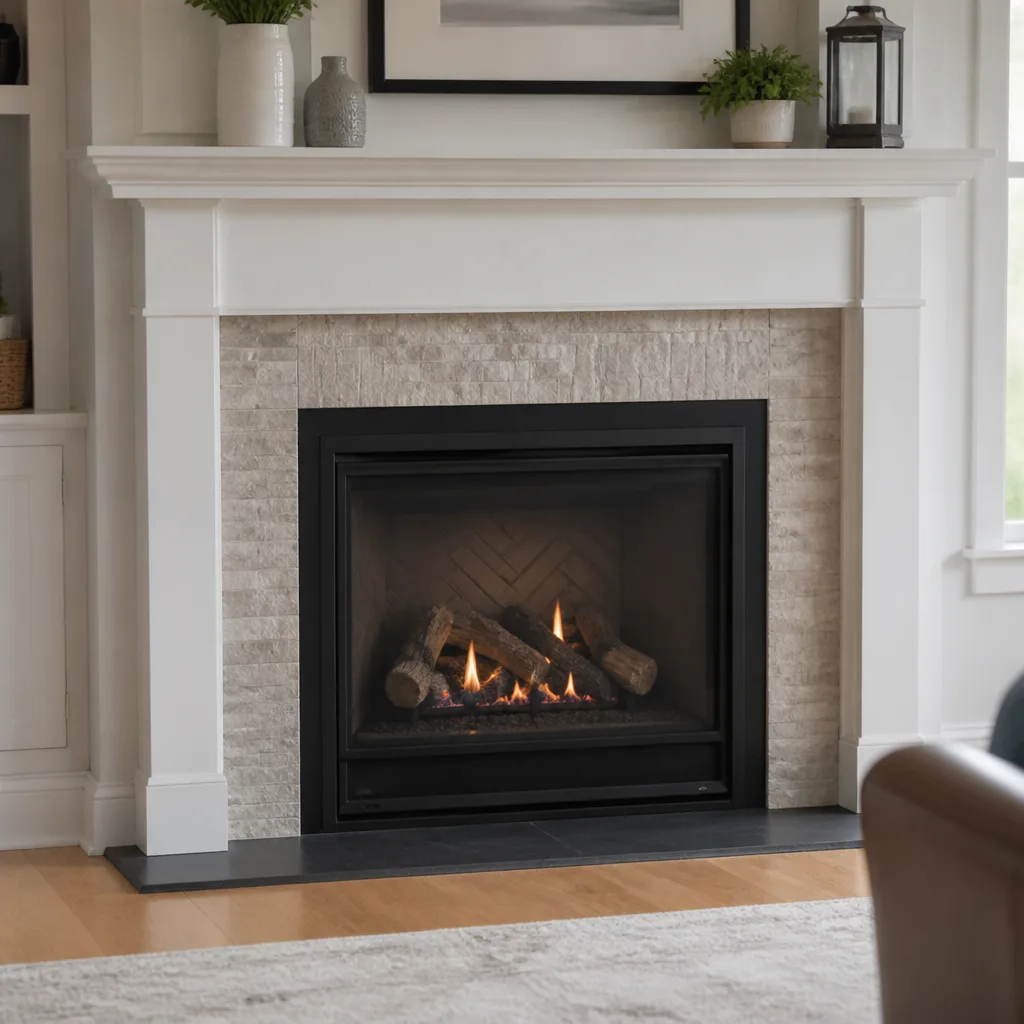 Gas fireplace service
Level 1 sweep and inspection to the NFPA 211 annual standard - flue, crown, cap, and flashing checked and photographed
Chimney sweep logs do not sweep chimneys. They loosen some creosote - which then falls where a brush and vacuum still have to collect it.
Chimney Sweep Troubleshooting in Peoria: Common Problems and How to Fix Them
If your fireplace smokes into the room, the first instinct is usually to blame the damper. That’s the most common wrong guess we run into, and it sends homeowners toward a part replacement that never touches the actual problem. In most Peoria homes, smoke rolling out of the firebox has nothing to do with a worn damper and everything to do with air pressure. A tightly sealed house fighting an HVAC system can pull harder than any chimney can push. This guide works backward from what you see – smoke, odor, a lazy fire, staining on the chase – to the mechanical cause behind it, so you can tell a blockage you can safely check yourself from a condition that needs a camera down the flue. You’ll also learn how creosote type changes the repair path, and when to stop troubleshooting and call.
Quick Answer
Most chimney problems in Peoria trace back to one of four causes: negative air pressure from a tightly sealed home, a blockage in the flue or cap, creosote buildup at a stage that changes the fix, or a structural defect like cracked flue tiles. You can safely identify a visible blockage from the firebox opening, but pressure problems, glazed creosote, and liner damage need a camera inspection to diagnose correctly. Matching the fix to the actual cause is what prevents repeat failures – and prevents spending money on the wrong part.
Styles & brands we work with
- Sweep & inspection
- Caps & crowns
- Flue relining
- Masonry repair
- Gas fireplace service
Table of Contents
- Start Here: The Symptom-to-Cause Map
- Why Smoke Comes Into the Room (It’s Usually Pressure, Not the Damper)
- How Peoria’s Sealed Home Construction Creates Negative Pressure
- Creosote Stages and Why They Change the Repair Path
- What You Can Safely Check vs. What Needs a Camera
- The Self-Triage Decision Tree
- Odors, Staining, and Slow Draw: Reading the Other Symptoms
- Common Mistakes to Avoid
- When to Call a Professional
Start Here: The Symptom-to-Cause Map
Troubleshooting starts with what you can observe, not with what you assume. Each symptom points to a small set of likely causes, and the same symptom can have different fixes depending on the chimney’s construction and the home’s air balance. Here’s how the most common complaints map to causes.
- Smoke rolls out of the firebox when you light a fire – usually negative pressure, an obstructed flue, or a flue that’s too cold to establish draft. Sometimes a combination.
- A smoky, ashy smell when the fireplace is off – creosote or soot residue, a downdraft pushing air back down the flue, or moisture interacting with deposits.
- A fire that burns lazy and produces heavy smoke – reduced draft, often from a partial blockage, a cap screen packed with debris, or pressure competition from exhaust fans.
- Dark staining on the exterior chase or near the top – a draft problem pushing smoke out of joints, a failing cap, or a crown that isn’t shedding water.
- Water in the firebox after a storm – a missing, damaged, or undersized cap; a cracked crown; or deteriorated flashing at the roofline.
- White or chalky residue on the exterior masonry – moisture moving through the brick, often tied to a failed crown or unsealed masonry.
That last group is where a lot of Peoria homeowners get stuck. Desert masonry doesn’t get the freeze-and-thaw punishment you hear about elsewhere, but intense summer sun followed by monsoon rain does its own damage over time, and the same chase that looks fine from the ground can have a hairline crown crack that lets water straight into the smoke chamber. Getting the symptom right is the whole game. A new damper installed to fix a pressure problem is money gone and a fire that still smokes.
Why Smoke Comes Into the Room (It’s Usually Pressure, Not the Damper)
Dampers rarely fail in the way people imagine. A damper is a simple plate; when it’s open, it’s open. If your fireplace smokes with the damper wide open, the damper isn’t your problem. What’s happening is that the air pressure inside the house is lower than the pressure at the top of the chimney, so instead of the flue pulling smoke up and out, the house pulls air down the flue and into the room. That’s a negative pressure loop, and it overrides damper function completely.
Several ordinary things cause it:
- Bathroom and kitchen exhaust fans running while a fire is lit. Each one pulls air out of the house. A fire needs that air.
- Clothes dryers venting indoors – a surprisingly strong contributor to backdraft in smaller, tight homes.
- HVAC return air balanced for cooling rather than for a fireplace. In a sealed house, return air can pull harder than the flue can push.
- Stack effect in two-story homes, where warm air rising to the upper floor creates a slight vacuum downstairs near the firebox.
- A cold flue on first light. A cold column of air in the flue has to be warmed before it will rise, which is why some fireplaces smoke for the first ten minutes and then settle down.
If backdraft is your symptom, the fix is usually about air balance, not parts. Sometimes it’s as simple as cracking a window near the firebox during startup, sometimes it means adjusting how the home’s exhaust systems run during a fire, and sometimes it means the flue itself is undersized for the firebox opening and needs a proper evaluation. We’ve seen plenty of Peoria homes where a well-meaning replacement damper was installed and the smoking continued exactly as before. Diagnosis before parts is the rule.
How Peoria’s Sealed Home Construction Creates Negative Pressure
Peoria has grown fast, and a lot of its housing stock is newer construction built for air-conditioning efficiency. That means tight envelopes, spray foam, sealed crawl spaces, and HVAC systems designed to move a lot of air. Good for your electric bill. Complicated for your fireplace.
A wood-burning fireplace needs a supply of air to burn and to carry smoke up the flue. In an older, draftier home, that air leaks in around windows and doors and nobody thinks about it. In a sealed Peoria home, that leakage doesn’t exist, so the fireplace competes with the HVAC and the exhaust fans for a limited air supply. When the competition wins, smoke comes into the room.
This is a desert-Southwest pattern, not a universal one. Homes in wetter, older parts of the country have the opposite problem sometimes – too much air infiltration, which makes fireplaces erratic but rarely causes the tight, repeatable backdraft that sealed construction produces. Peoria’s summer heat adds another wrinkle: when it’s 110 outside and 78 inside, the temperature difference across the flue is large, and that difference affects how the stack behaves at startup.
What this means for troubleshooting: if your fireplace smokes and your house is sealed, the fix is very often about bringing air to the firebox or rebalancing exhaust, not about rebuilding the chimney. It also means a simple sweep and visual inspection may not surface the issue – pressure problems don’t show up on a camera, they show up in how the system behaves when a fire is lit. A thorough Chimney Sweep Peoria visit should include a conversation about how the fireplace behaves in your specific home, not just a brush down the flue.
Creosote Stages and Why They Change the Repair Path
Creosote is the residue left behind when wood smoke cools inside the flue. Not all creosote is the same, and the difference matters enormously, because the stage determines not just how the chimney gets cleaned but whether the flue can be cleaned at all or needs relining.
Stage 1: Flaky, Sooty Creosote
This is the light, dusty, flake-off-with-a-brush type. It forms when the fire burns reasonably hot and the flue stays warm. A standard sweep removes it completely, and the flue goes back to service. If your chimney has only stage 1 creosote, you’re in the easy category, and the recommendation is routine sweeping on a sensible interval.
Stage 2: Crusty, Brittle Creosote
This is denser and harder to remove. It forms when the fire runs cooler or the wood is less than fully seasoned. A brush alone may not clear it. Depending on how much is present, it may need more aggressive mechanical cleaning methods, and the technician will usually want a camera to confirm the flue tiles are still intact underneath.
Stage 3: Glazed, Hardened Creosote
This is the fire-risk category. Glazed creosote looks like a shiny, hardened shell bonded to the flue wall and it doesn’t come off with a brush. It’s also the most combustible stage, and it’s the reason chimney fires start. A flue with significant stage 3 creosote often cannot be adequately cleaned in place without specialized methods, and in some cases the safe answer is relining with a system like DuraFlex rather than trying to remove the glaze from a tile flue that may already be compromised. That’s not a sales pitch – it’s a judgment about whether the flue will be safe after cleaning.
Here’s the part most guides skip: the creosote stage changes the entire plan, not just the cleaning method. Stage 1 might be a sweep and out. Stage 2 might be a sweep plus a camera evaluation plus a decision. Stage 3 is where structural repair and liner replacement enter the conversation, and where doing the right thing now prevents a much larger problem later. Glazed creosote is a situation where you want a specialist who does the repair, not a generalist who sweeps and leaves. That’s the difference between a chimney repair capability on the same visit and a second appointment with a different company.
If you want to understand the full sweep process and what a proper cleaning looks like, our chimney sweep page covers it in detail.
What You Can Safely Check vs. What Needs a Camera
A homeowner can learn a lot from the firebox opening without taking any risk. A homeowner should not be climbing on the roof, opening the firebox beyond the damper, or trying to remove a blockage from above. The line is simple: look from the bottom, from the floor, with a flashlight. Anything above the smoke shelf is a professional’s territory.
Safe to Check From the Firebox Opening
- Whether the damper opens fully and freely. It should move through its full range without binding.
- Whether there’s visible debris, soot, or a fallen nest on the smoke shelf just above the damper.
- Whether the firebox walls show cracks, and whether the mortar joints are intact.
- Whether you can see daylight or the cap screen when you look up the flue with the damper open and a flashlight. If you see it clearly, the flue may be at least partly clear – but a clear view doesn’t mean there’s no creosote or a tile defect above.
- Whether the firebox smells of creosote or moisture, which points to residue or water intrusion.
Requires a Camera Inspection
- Creosote stage anywhere above the first few feet of the flue. Creosote deep in the flue is not visible from the firebox.
- Cracked or spalled flue tiles. A cracked tile is a carbon-monoxide path into the house.
- Offset or misaligned flue sections, common in older construction and in some rebuilds.
- Obstructions lodged in the flue – bird nests, leaves, collapsed mortar, or a failed cap that has dropped debris into the chimney.
- The condition of the smoke chamber, which is difficult to assess without a camera and is one of the most common places for hidden damage to live.
- Whether the liner has separated from the chimney walls, which matters for both safety and draft.
This is where we draw a firm line. A visual inspection from the ground tells a technician something, but it doesn’t tell you the creosote stage or the condition of the tiles 15 feet up. A camera inspection produces images you can look at yourself, and it’s the difference between “we recommend relining” and “here’s the cracked tile at your flue, here’s the glaze line, here’s the smoke chamber damage.” Any recommendation should be backed by that evidence. Cash for a relining estimate you can’t verify is the biggest reason homeowners hesitate on chimney work, and they’re right to hesitate.
The Self-Triage Decision Tree
Use this before you call. It saves an unnecessary visit when the answer is simple, and it helps a technician help you faster when the answer isn’t.
- Does the fireplace smoke only when it’s first lit and then settle down after ten or fifteen minutes? That’s usually a cold flue and a startup draft issue. Try warming the flue briefly (a rolled newspaper held near the open damper, never inside the firebox) and see if the behavior improves. If it does, you have a cold-flue pattern, not a structural problem.
- Does it smoke heavily every time, especially with exhaust fans or the HVAC running? That points to negative pressure. Try running the fire with a nearby window cracked a couple of inches. If the smoking stops, pressure is your cause, and the fix is about air balance. Call for an evaluation of the flue size and the home’s air supply.
- Does it smoke and you can smell a strong creosote or ashy odor with the fireplace off? That points to accumulated creosote or soot. Book a sweep and inspection. Don’t burn again until it’s been cleaned.
- Is the draw weak and the fire burns lazily, but there’s no smoke in the room? That’s a partial blockage or a cap screen packed with debris. A sweep resolves most of these, but the cap condition needs checking at the same time.
- Is there water in the firebox or staining on the chase after a storm? That’s a cap, crown, or flashing issue and it needs the roof end looked at. Book an inspection that includes the exterior components, not just a sweep.
- Is there any visible cracked tile, or has the chimney been through a chimney fire? Stop using the fireplace. This is a camera-and-repair situation with a safety dimension, not a troubleshooting one.
If none of the above matches and you’re just due for a sweep, that’s the easy case. Book a Peoria sweep and inspection and start the season clean.
Odors, Staining, and Slow Draw: Reading the Other Symptoms
Smoke is the loudest symptom, but it’s not the only one. Three quieter complaints come up often in Peoria, and each points at a specific cause.
Odor When the Fireplace Is Off
A smoky smell that appears when there’s no fire usually means creosote or soot residue is present and the flue is pushing a small amount of air back into the room – a downdraft on a still, warm day. It can also mean moisture is interacting with deposits. The fix is almost always a thorough sweep plus a check of the cap and the pressure balance in the home. Odor is a symptom, not a disease; treating it with an air freshener is treating the wrong thing.
Staining on the Exterior Chase
Dark streaking near the top of the chimney usually means the flue is spilling smoke through the masonry joints, which happens when a tile liner has failed or the crown is cracked. White chalky staining is usually efflorescence – moisture migrating through the brick and leaving mineral deposits behind. Both require a look at the crown, the flashing, and the masonry. HeatShield resurfacing is one of the repair options for a smoke chamber or flue that’s rough and pitted and needs a smooth surface restored; a Gelco cap is often the long-term answer for water entry at the top. The point is to solve the water or draft issue, not to paint over it.
Slow Draw
A fire that lights but never seems to pull properly is a draft problem. It can be a partial obstruction, a flue that’s too large or too small for the firebox, a height issue that lets surrounding structures compete, or a pressure problem. Slow draw is the symptom most likely to be misdiagnosed as a simple cleaning need when the real fix is a flue evaluation.
Notice a pattern here: most of these symptoms resolve to the same handful of causes. The reason troubleshooting matters is that the fix for each is different, and applying the wrong one wastes money without solving anything.
Common Mistakes to Avoid
- Replacing the damper before diagnosing the pressure. It’s the mistake that starts this whole guide. If the fireplace smokes with the damper open, the damper isn’t the problem. Get the pressure evaluated first.
- Burning soft or green wood to “save money.” In Peoria’s dry climate it’s tempting to burn whatever’s on hand, but unseasoned wood produces more smoke and more creosote, and creosote at the glazed stage changes your repair path entirely.
- Assuming a clear view up the flue means a clean chimney. You can see daylight and still have a stage 2 or stage 3 creosote layer on the flue walls. The camera is the difference between “looks clear” and “it’s clear.”
- Skipping the cap because the chimney looks fine from the ground. A missing or damaged cap is the most common source of water in the firebox and debris in the flue. Gelco caps solve the problem at the source; a screen over an open flue doesn’t.
- Letting a generalist handyman look at a chimney. A chimney is a specific system – flue, liner, smoke chamber, crown, cap, and flashing – and it wants a specialist with the right camera, the right materials, and the repair capability to close the loop. An anonymous repair by an unqualified hand is a worse outcome than no repair at all.
- Ignoring a cracked tile because the fireplace still works. A cracked flue tile doesn’t always announce itself with a functional failure. It announces itself with carbon monoxide. Inspect before the season, not after a symptom.
- Putting off a sweep until the fireplace misbehaves. Some problems – glazed creosote, failed tiles, an obstructed flue – don’t produce symptoms until the fire is lit and things go wrong. Routine sweeping plus an inspection catches them early.
When to Call a Professional
Call a professional if you smell a strong creosote odor with the fireplace off, if smoke enters the room and doesn’t clear when you crack a window, if you’ve had a chimney fire (even a small one), if you see cracked tiles or a damaged crown, if there’s water in the firebox after a storm, or if you’ve never had the chimney inspected and you’ve been burning fires. If the fireplace behaves normally and you’re simply due for a sweep, that’s also a call – routine sweeping is the cheapest form of prevention.
Chimney Sweep Peoria offers free estimates in Peoria. Call (866) 618-5984 to book a sweep, inspection, or repair evaluation. We answer 24/7 with fast dispatch from 7am to 7pm, Sunday through Friday.
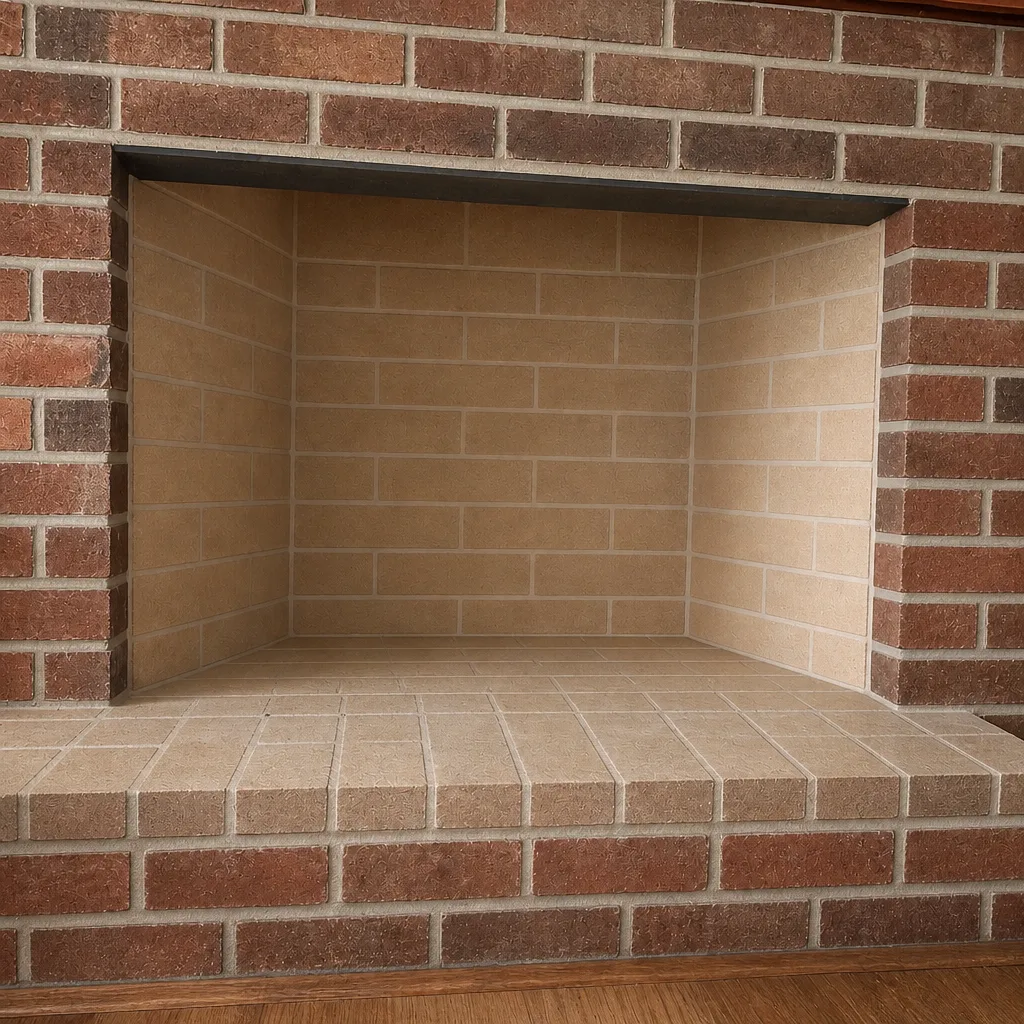
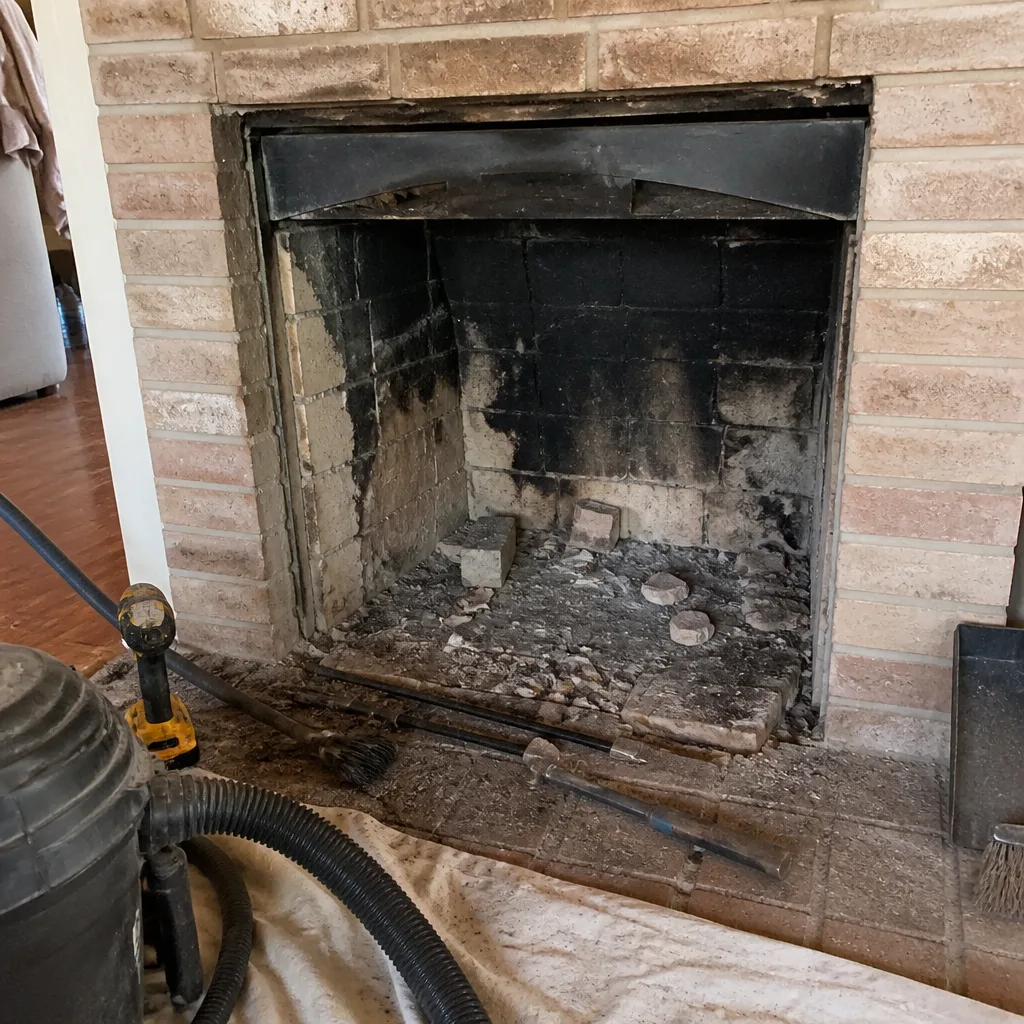
See the difference
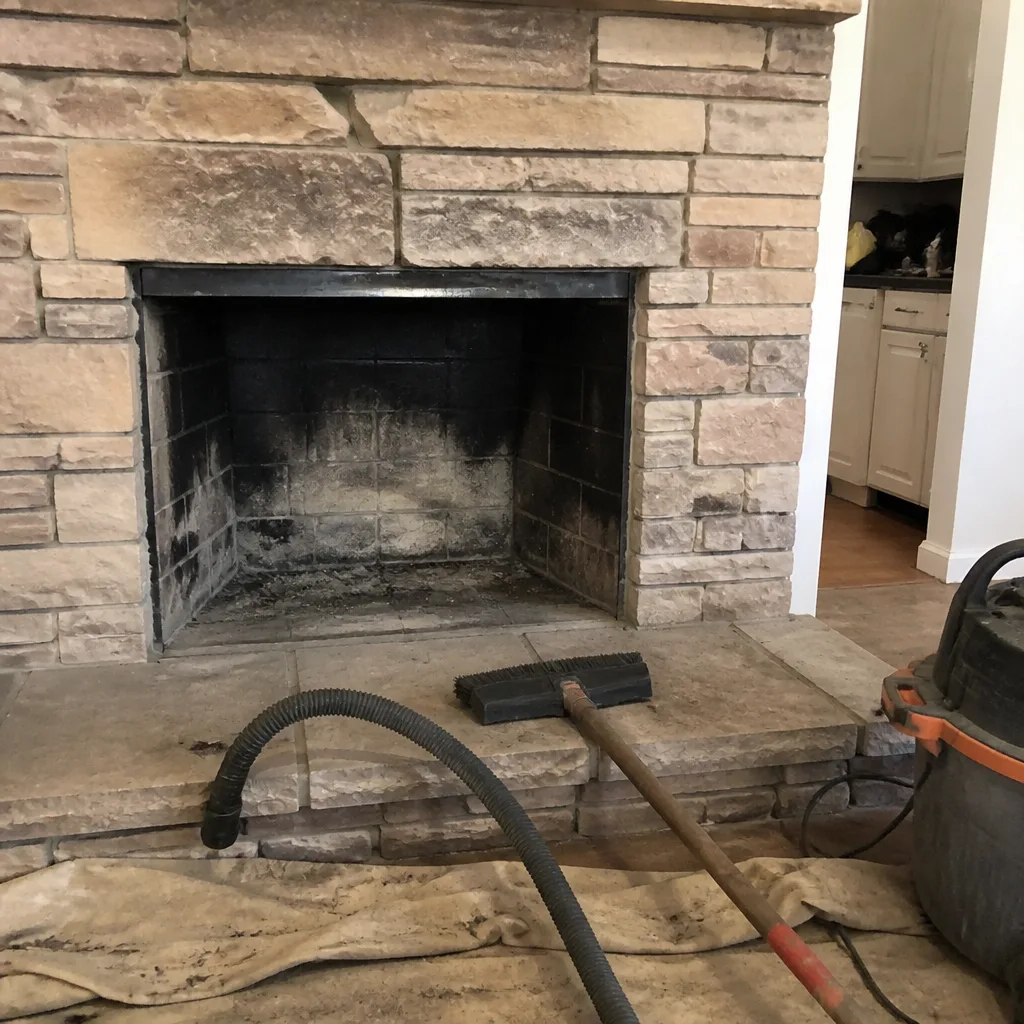 Before
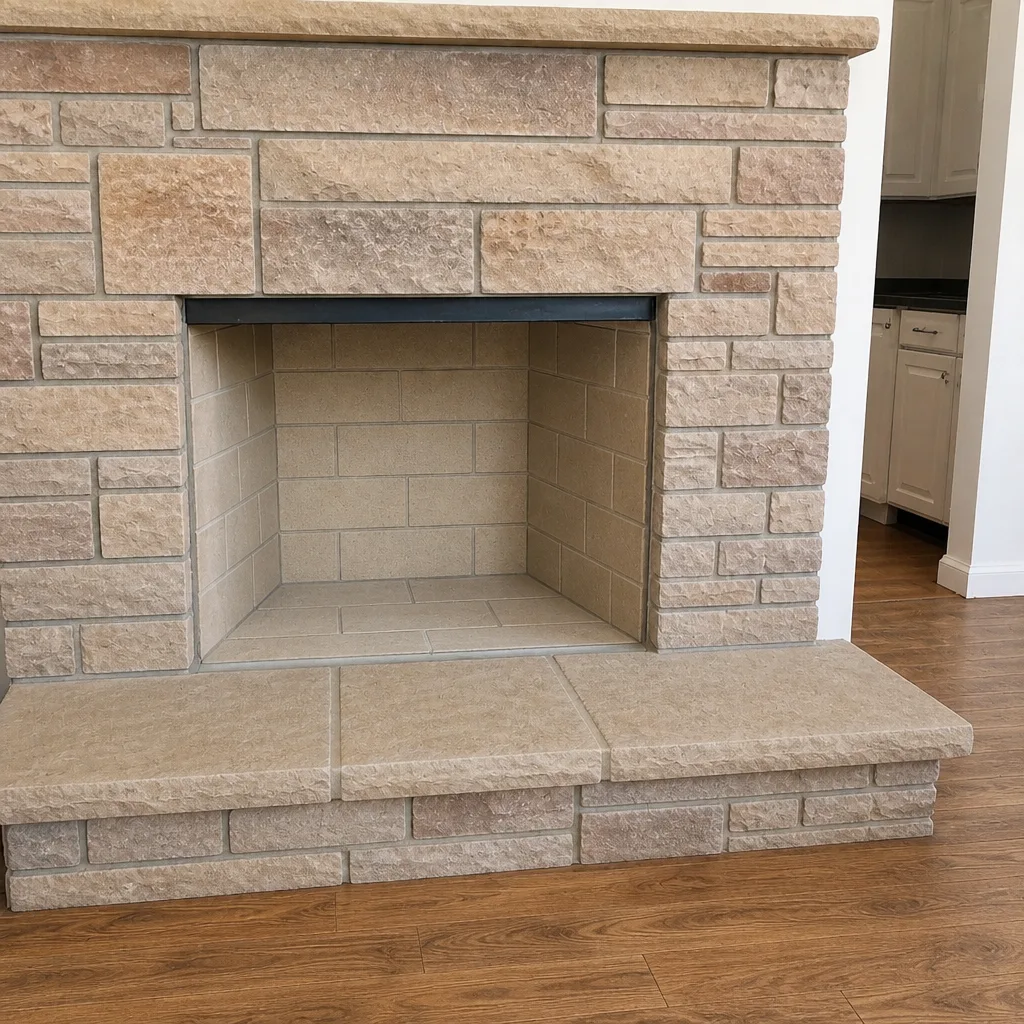 After
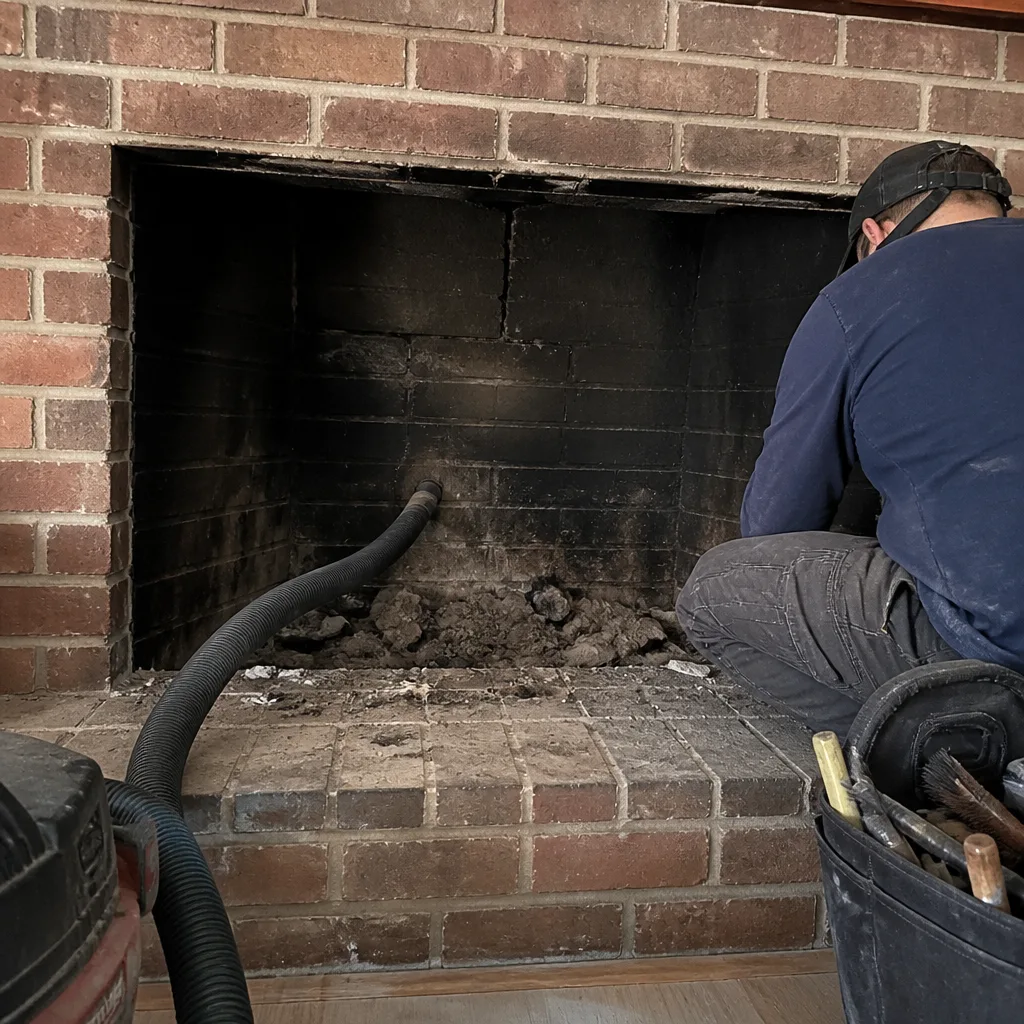 Before
 After
 Before
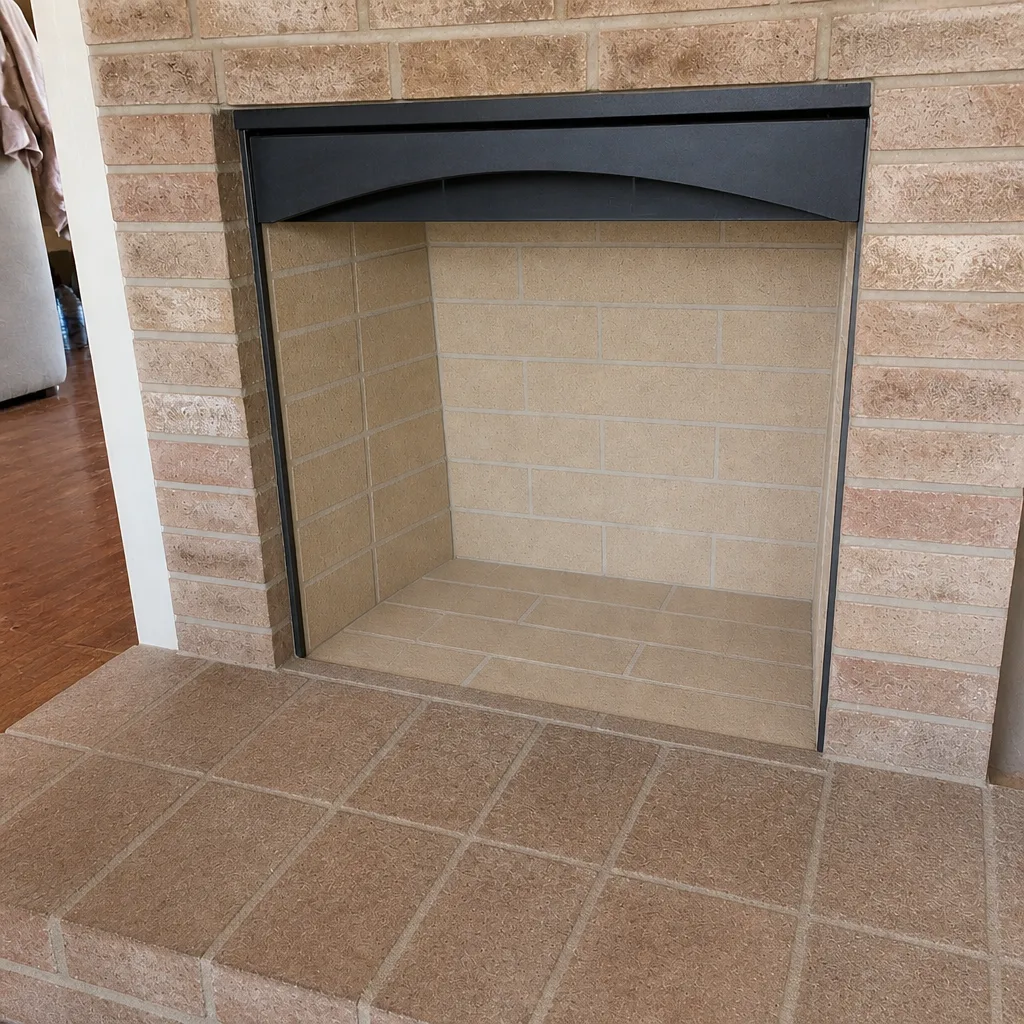 After
Frequently Asked Questions
Most wood-burning chimneys should be swept at least once a year, and more often if you burn heavily or notice slow draw or smoke in the room. Peoria’s dry climate keeps wood from getting soaked, but creosote still accumulates the same way. Annual sweeping plus an inspection catches problems while they’re still cheap to fix. Call (866) 618-5984 to book a sweep – estimates are free.
Creosote builds up on the flue walls, and at the glazed stage it becomes highly combustible. That’s what chimney fires feed on. Skipping a sweep also lets a small tile crack or a failing crown go unnoticed until it has caused structural damage or a carbon monoxide path into the home. The cheap fix is the sweep you schedule; the expensive fix is the one you’re forced into. Call (866) 618-5984 for a free estimate on a sweep and inspection.
Only if the camera shows the flue tiles are damaged, misaligned, or coated with creosote that can’t be safely removed. A cracked tile is a real safety issue, and a DuraFlex liner is one of the systems we install for that situation. But if the tiles are intact and the creosote stage allows a proper cleaning, you don’t need a liner, and we’ll tell you so. Call (866) 618-5984 and ask for a camera inspection – you’ll see the images before anyone recommends a repair.
Negative air pressure inside the home is the most likely cause. In a tightly sealed Peoria house, HVAC return air and exhaust fans can pull harder than the flue can push, and the smoke comes back into the room regardless of what the damper is doing. Try cracking a window near the fireplace while the fire is lit. If that fixes it, you have a pressure problem, not a damper problem. Call (866) 618-5984 to have the flue and the home’s air balance evaluated.
Only partly. You can check the firebox and the smoke shelf from the bottom, and you can see whether the damper opens fully. But you can’t see the creosote stage deep in the flue or whether the tiles are cracked without a camera. A clear view up the flue is not the same as a clean flue. Call (866) 618-5984 to schedule a camera inspection.
Yes, and the difference changes the repair plan, not just the cleaning method. Flaky creosote comes off with a brush and the flue goes back into service. Glazed creosote is bonded to the wall and combustible, and it often means the flue needs specialized cleaning or relining rather than a simple sweep. Treating glazed creosote like flaky creosote is one of the most common failures we see. Call (866) 618-5984 for an inspection with camera evidence before the next fire.
The Bottom Line
Chimney troubleshooting is about matching the symptom to the cause, not guessing at parts. Smoke in the room points to pressure in a sealed Peoria home. Odors point to residue. Water points to the cap and the crown. Slow draw points to a flue evaluation. And the creosote stage – flaky, crusty, or glazed – determines whether the path is a sweep, a repair, or relining. If you do the diagnostic work first, you avoid the wrong fix and the repeat failure. If you skip it, you eventually pay for both. Chimney Sweep Peoria handles sweep, repair, and inspection as one system, with professional-grade materials from DuraFlex, HeatShield, Gelco, Olympia Chimney, Famco, and Copperfield, so the company that finds the problem is the one that fixes it. Our technicians have up to 10 years of experience. Call (866) 618-5984 for a free estimate.
Written by the team at Chimney Sweep Peoria.