
Emergency Chimney Sweep Near Me: What Peoria Homeowners Should Do First
A chimney fire can reach 2,000°F inside a flue while producing almost no visible flame outside. The cracking sound most people describe as “unusual” is often the only warning before the fire spreads to framing. If you’re searching this at 9pm with a smell you can’t place, here’s the short version: close the glass doors, get everyone out, and call 911 if you see flames or heavy smoke at the top. If it’s a smell or a draft problem with no fire, you have time to book a proper inspection. Either way, if you’d rather not DIY this, call (866) 618-5984.
What Are the First Steps If You Think Your Chimney Is on Fire?
Act in this order. Don’t stop to Google the symptom first; the sequence matters more than the diagnosis.
- Get everyone out of the house, including pets. Do this before anything else. A chimney fire that has moved into framing gives you less time than you think.
- Call 911 if you see flames, sparks, or heavy smoke from the chimney top, or if you smell burning that isn’t wood smoke. Fire department first. Always.
- Close the glass doors on the fireplace and shut the damper. Cutting oxygen to the firebox slows it. Only do this if you can reach the controls without standing in smoke.
- Don’t put water on it. A sudden temperature drop can crack tiles or the liner. Leave suppression to the fire department.
- Move cars away from the driveway so the fire crew can get in. Then stay out until they clear the house.
- If there’s no fire – just a smell, a weak draft, or soot falling – close the doors, let the fire burn down, and book a chimney sweep before you light another one.
Notice the fork at step two. A chimney fire in progress and a blocked or dirty flue can feel similar from the living room. The difference is visible smoke at the top of the stack and the sound. We’ll get to those next, because reading the signs wrong sends you to the wrong call.
How Do You Tell a Chimney Fire From a Normal Hot Fire?
A normal hot fire is loud in a friendly way. A chimney fire is loud in a wrong way. Use your ears first, then your nose, then your eyes at the roofline.
Sound. A roaring fire sounds like a low rush of air. A chimney fire sounds like a rumble with popping, tapping, or a crackling that carries a rhythm – almost like distant applause. Homeowners describe it as “freight train” or “buzzing.” If the noise grows after you close the glass doors, that’s a chimney fire sign, not a normal fire settling.
Smell. Wood smoke is familiar. What you’re listening for is a hot, acrid, almost chemical smell – like burning metal or scorched dust. That’s the creosote igniting, and it’s different from the smell of a fire that’s just poorly drafting.
Smoke at the top. Go outside and look up. A healthy fire sends a thin, steady plume. A chimney fire sends thick dark smoke, sometimes with sparks, and sometimes a visible glow at the crown. In Peoria, where most chimneys sit against a stucco wall under a tile roofline, that glow can be hard to see – check from the street, not from directly under the eave.
One more tell. Creosote that has been burning leaves a honeycomb or puffy, blistered texture on the flue walls. A technician sees it immediately. You can’t, from the firebox. Which is why none of this replaces an inspection – it just buys you time before one.
Carbon Monoxide Is a Separate Problem With Different Steps
Carbon monoxide doesn’t announce itself with sound or smoke. That’s the whole problem. If your CO alarm sounds, treat it as a gas emergency, not a chimney fire.
- Get outside immediately. Don’t open windows to “air it out” first. Don’t hunt for the source. Leave.
- Call 911 from outside. Tell them a CO alarm is sounding and whether anyone has symptoms.
- Don’t re-enter until the fire department says it’s clear. This is not negotiable, even if the alarm stops.
- Get anyone with headache, dizziness, nausea, or confusion checked. Those are CO symptoms and they can be subtle.
Why the distinction matters: homeowners conflate the two risks and hesitate. Someone smells creosote and thinks “chimney fire” and waits by the fireplace. Someone hears a CO alarm and thinks “probably a battery” and resets it. Both are the same mistake in different clothing – treating a signal as a nuisance.
A blocked or cracked flue lets CO back into the house. In Peoria, that happens most often when a bird or wasp nest plugs the flue over the summer, or when a liner has cracked from years of heat cycling. Neither is visible from the living room. A CO alarm is your only reliable early warning, and it isn’t a substitute for an inspection – it’s a backup for when the inspection is overdue.
What Should a Technician Check After a Chimney Fire?
A quick look down the flue with a flashlight is not a post-fire inspection. It misses the damage that matters. Here’s what a proper assessment covers, and what you should ask for before you use the fireplace again.
- A camera inspection of the full flue, top to bottom. Video, not just a mirror and a light.
- Checking tile or liner integrity. Chimney fires crack tiles and warp metal liners. A hairline crack lets heat and CO reach framing.
- Inspecting the smoke chamber and damper. Creosote glazes and can reignite if it isn’t fully removed.
- Checking the crown and cap. Heat and pressure can lift a cap or crack a crown, which lets water in – a slow failure that starts the season after.
- Confirming the firebox and surround. In Peoria, a lot of fireboxes are set into masonry with a stucco finish. The finish can look fine while the masonry behind it has spalled.
- Written documentation with photos. Ask for it. If a company can’t hand you images of what they found, you don’t have an inspection – you have an opinion.
If damage is found, it gets fixed. That’s the value of working with a company that sweeps, inspects, and repairs as one job. A cracked liner found during a sweep is a DuraFlex liner replacement conversation, not a second appointment with a different contractor who has to re-diagnose everything from scratch. The gap between “we found a problem” and “we fixed it” is where most homeowners get frustrated.
The November Problem: When It Looks Like an Emergency but Isn’t
Every November, Peoria fireplaces get lit for the first time since spring. And every November, a lot of homeowners smell something odd, see weak draft, or get a puff of smoke into the room and assume the worst. Usually it’s nesting.
Birds, wasps, and the occasional confused squirrel treat an unused flue as prime real estate. A summer’s worth of nest material and insect debris partially blocks the flue. Airflow drops. Smoke backs up. It looks alarming and it isn’t a chimney fire – it’s a blockage, and it’s the most common reason a fireplace “suddenly stops working” after a quiet season.
Signs it’s a blockage, not a fire:
- Smoke rolls into the room when you first light up, then settles once the fire is going.
- A musty or dusty smell rather than a hot, acrid one.
- Draft that’s weak from the start, not that changes over time.
- No unusual sound. No smoke at the roofline. No glow at the crown.
If it fits that pattern, don’t light the fireplace again until it’s been swept. A nest in a hot flue is a fire waiting for a reason. It’s not a 911 call, but it is a same-week booking.
When to Call a Pro, and What the Visit Actually Covers
Call us when the fire is out and you want to know if the fireplace is safe to use again. Also call if you’re seeing any of these:
- A CO alarm that went off, even briefly, and cleared after you reset it.
- Soot falling into the firebox or a smoky smell that lingers after the fire is out.
- A visible crack in the liner, smoke chamber, or firebox masonry.
- A fireplace that hasn’t been swept since before last heating season.
- Weak draft that doesn’t resolve when you crack a window.
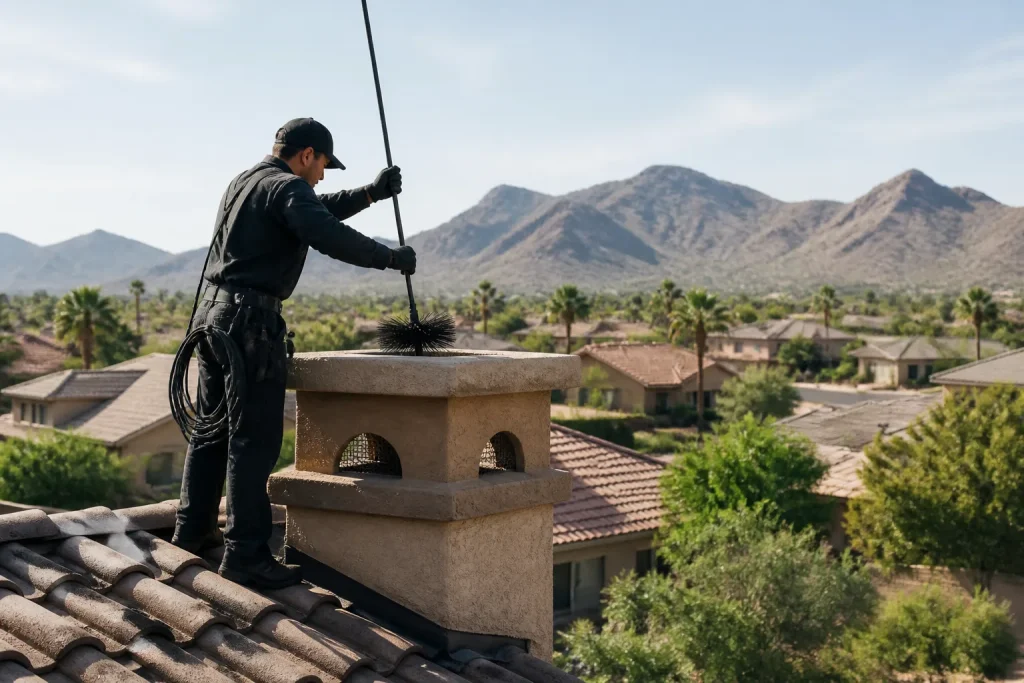
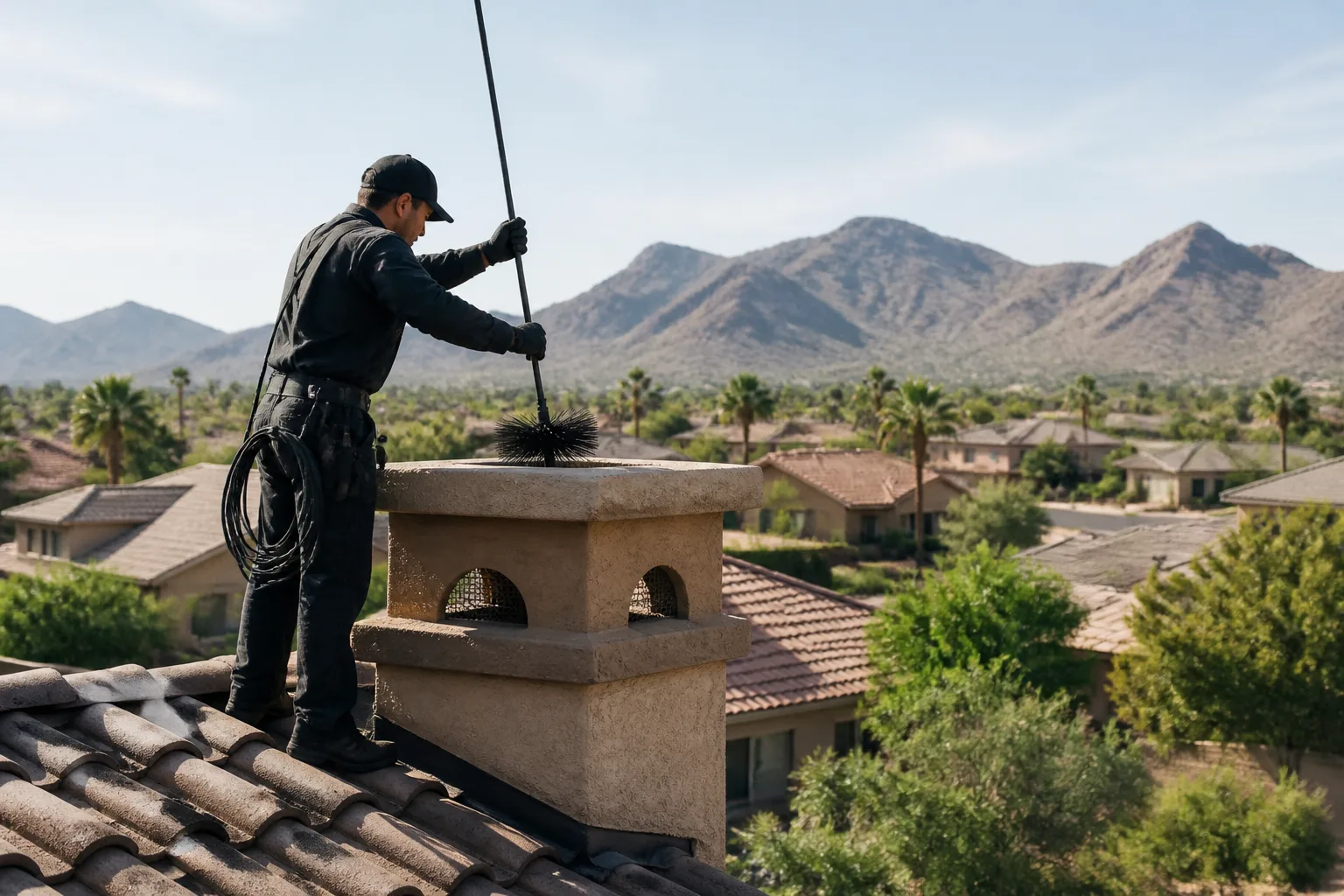
A proper visit covers all three parts of the job: a Chimney Sweep Peoria appointment to clear creosote and debris, a camera inspection to document the liner, crown, and chamber, and repair work if anything’s found. The materials we reach for are named and spec-documented – DuraFlex liner systems, HeatShield resurfacing, Gelco caps – because a homeowner should be able to look up what’s going into their house. Our technicians have up to 10 years of experience, and we’re licensed and insured.
We don’t hand you a bill for a sweep and then tell you a liner is needed with no evidence. Camera footage, photos, and a written report. If something can safely wait until spring, we say so. That’s the whole point of a specialist visit.
Related Services in Peoria
If you’re in Peoria, the three services you’ll likely need are a routine sweep, a post-fire inspection, and chimney repair for anything found along the way. All are handled under one call, so diagnosis and repair don’t get handed off.
What happens when you call
- 1
A real person answersNo phone trees – you reach a local pro.
- 2
You get an upfront price rangeHonest numbers before anyone is dispatched.
- 3
A background-checked tech heads outLicensed & insured, dispatched right away.
- 4
You approve before work beginsNothing starts until you say go.
The Bottom Line
In a suspected chimney fire: get out, call 911 if there’s fire or heavy smoke, and don’t put water on it. In a suspected CO problem: get out, call 911, don’t reset the alarm and stay inside. In anything else – smells, weak draft, a smoky fireplace on the first cold night – you have time, and the right move is a sweep and a documented inspection before you light up again. The November nesting problem is the most common false alarm we see in Peoria, and it’s a quick fix. The real risk is the fire you don’t see.
If you’re in Peoria and need help, Chimney Sweep Peoria offers free estimates – call (866) 618-5984. We answer 24/7. Fast dispatch from 7am to 7pm, Sunday through Friday.
Frequently Asked Questions
You don’t, from inside the house – and that’s why you act on the safe side. If you see flames or heavy dark smoke at the chimney top, hear a rumbling or popping sound that doesn’t stop, or smell something acrid and hot, treat it as a chimney fire and get everyone out before calling 911. Things like a musty smell, weak draft, or smoke rolling into the room on a first fire of the season are usually a blockage, not a fire. Either way, don’t relight until it’s been inspected. Call (866) 618-5984 for an exact quote – estimates are free.
A routine sweep in Peoria typically runs in the range you’d expect for a full-service visit that includes a camera inspection – pricing is set per job by the written estimate, so the number depends on the flue, the access, and whether anything is found. What you should insist on is the inspection bundled in, because a cheap sweep with no camera check tells you nothing about the liner or the crown. Call (866) 618-5984 for an exact quote – estimates are free.
Not until a technician has done a camera inspection, confirmed the liner and tiles aren’t cracked, cleared the glazed creosote, and checked the crown and cap. A visual check from the firebox isn’t enough. Chimney fires cause damage you can’t see from the living room, and a cracked tile or warped liner is how carbon monoxide gets into the house. If damage is found, it gets repaired before the first fire – not after. Call (866) 618-5984 for an exact quote – estimates are free.
Because something moved in over the summer. Bird nests, wasp nests, and insect debris build up in an unused flue, and a partial blockage drops your draft enough that smoke rolls into the room when you first light up. It’s not a chimney fire and it usually isn’t a structural emergency – but it does need a sweep before the next fire, because a nest in a hot flue is exactly the kind of thing that starts one. Call (866) 618-5984 for an exact quote – estimates are free.
Written by the team at Chimney Sweep Peoria.
Need Chimney Cleaning Help?
Call Chimney Sweep Peoria - licensed & insured, with free written estimates in Peoria.
(866) 618-5984